
StepSolvers Blog
Plain-English math guides and explainers to go with our calculators, covering statistics, algebra, geometry, fractions and percentages.
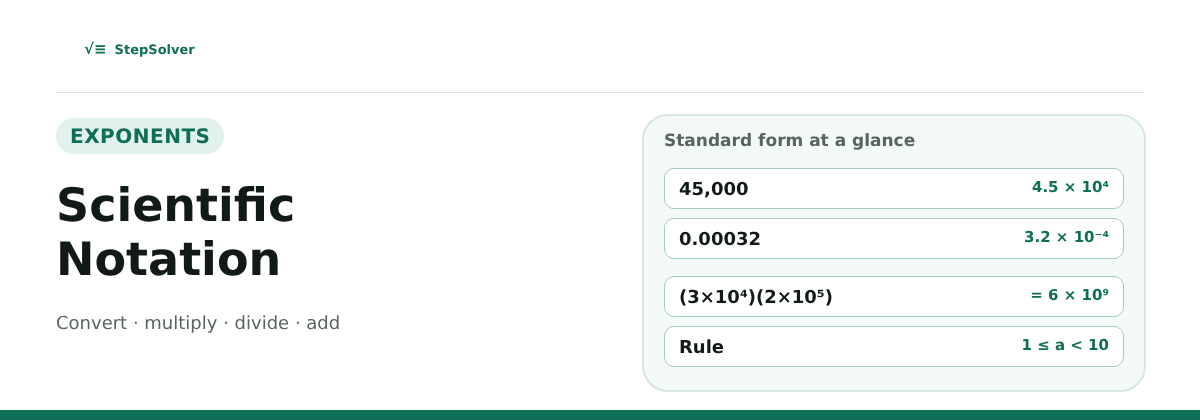
Scientific Notation: How to Write, Convert and Calculate
Rules and worked examples for converting numbers and for adding, subtracting, multiplying and dividing in scientific notation.
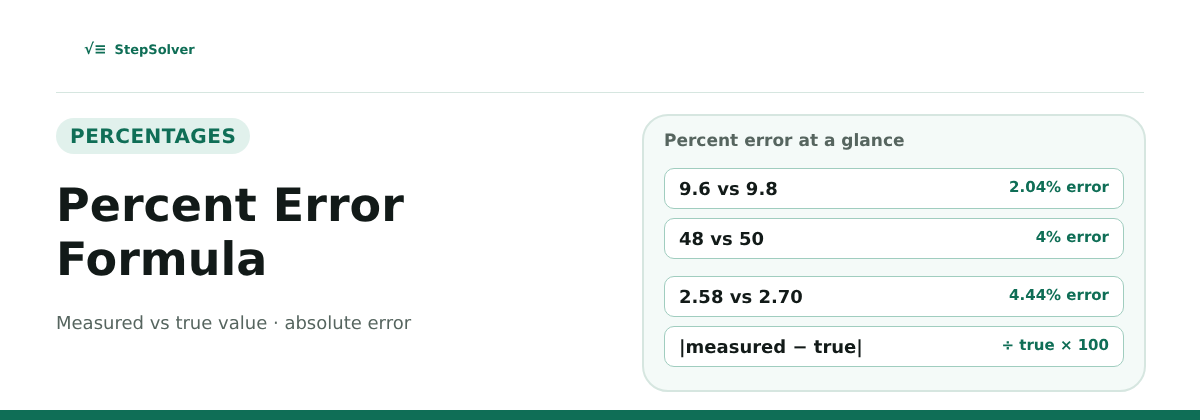
Percent Error: Formula, Examples and Common Mistakes
How to calculate percent error from a measured and true value, with lab examples, absolute value and practice problems.
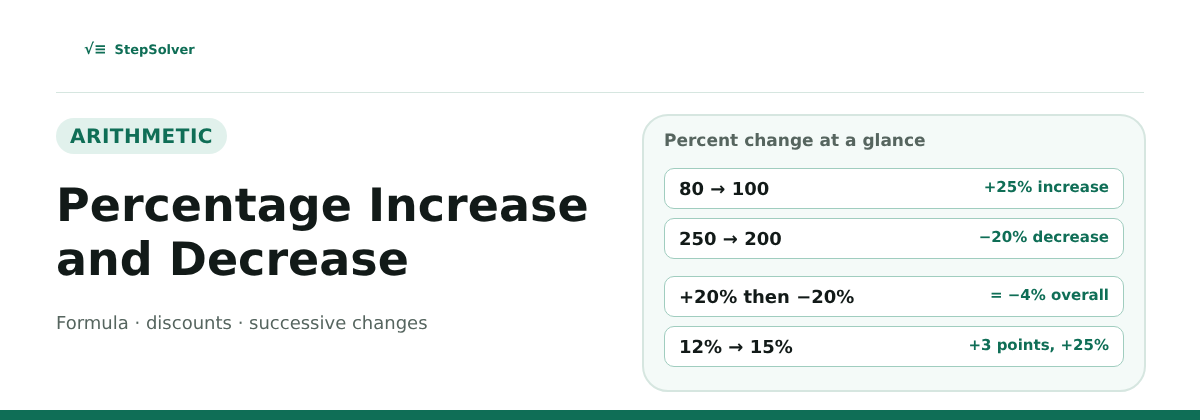
Percentage Increase and Decrease: Formula, Examples and Common Mistakes
The percent change formula with worked examples for discounts, tax, successive changes and percentage points.
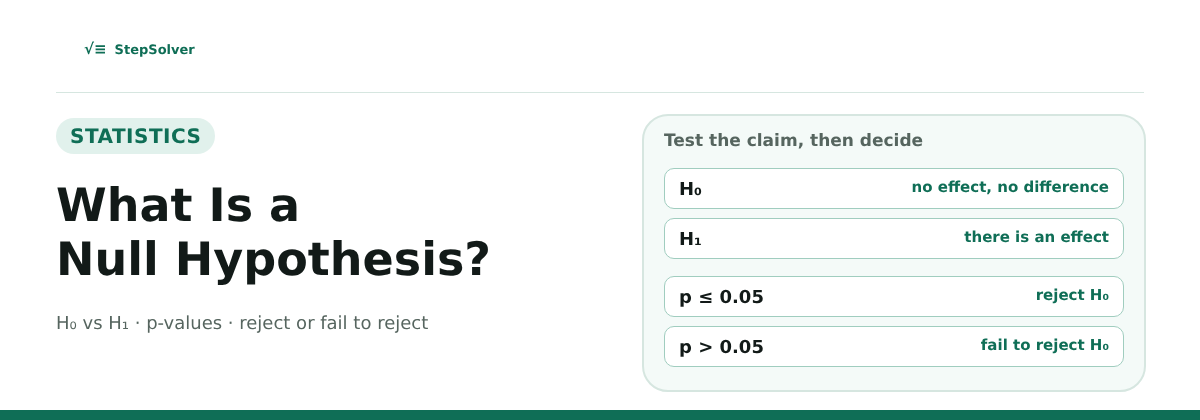
What Is a Null Hypothesis? A Plain-English Guide With Examples
What H0 and H1 mean, how to write them, and how a p-value decides whether to reject, with two worked examples.
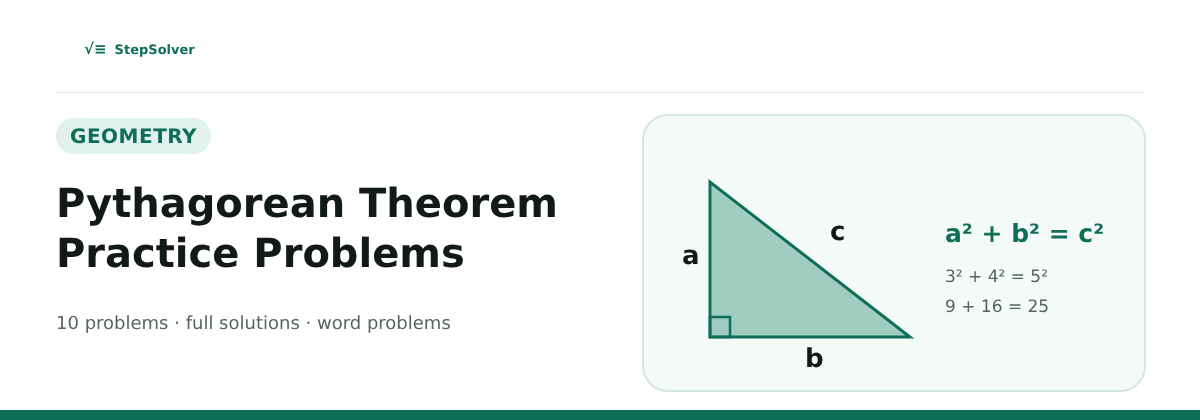
10 Pythagorean Theorem Practice Problems (With Step-by-Step Solutions)
Ten worked problems on the hypotenuse, missing legs, right-triangle tests and word problems, with a triples table.
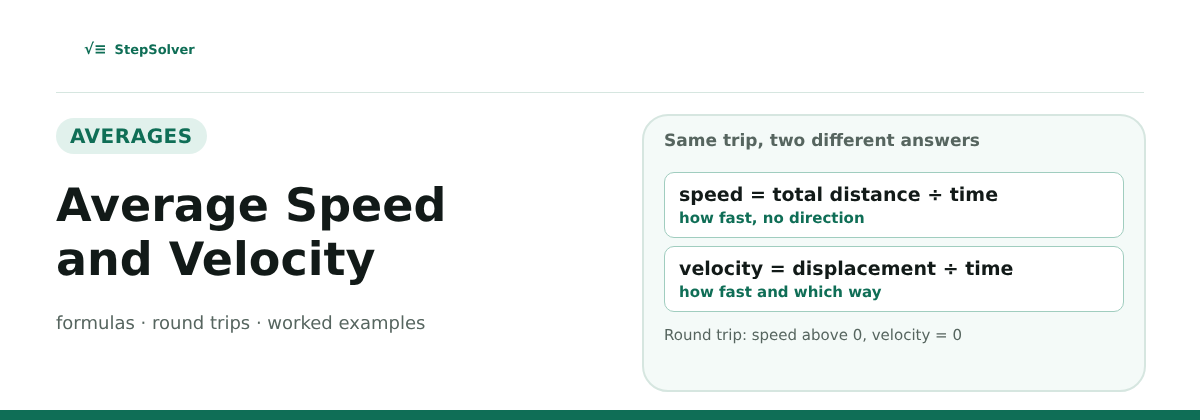
How to Calculate Average Speed and Average Velocity (With Examples)
The formulas for speed and velocity, the difference between them, round trips, unit conversion and practice problems.
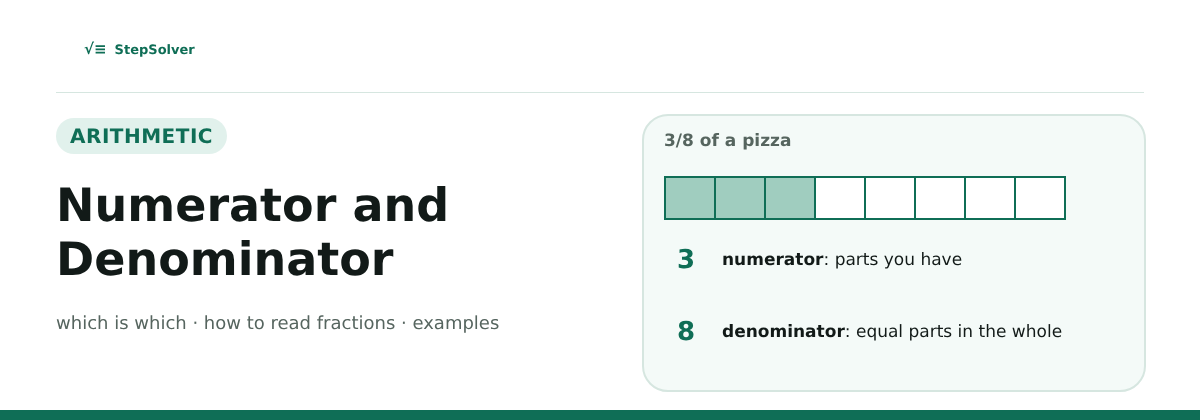
What Is a Numerator and Denominator? (With Examples)
Which number is on top, what each one means, how to read fractions, and how they change when you compare, add or simplify.
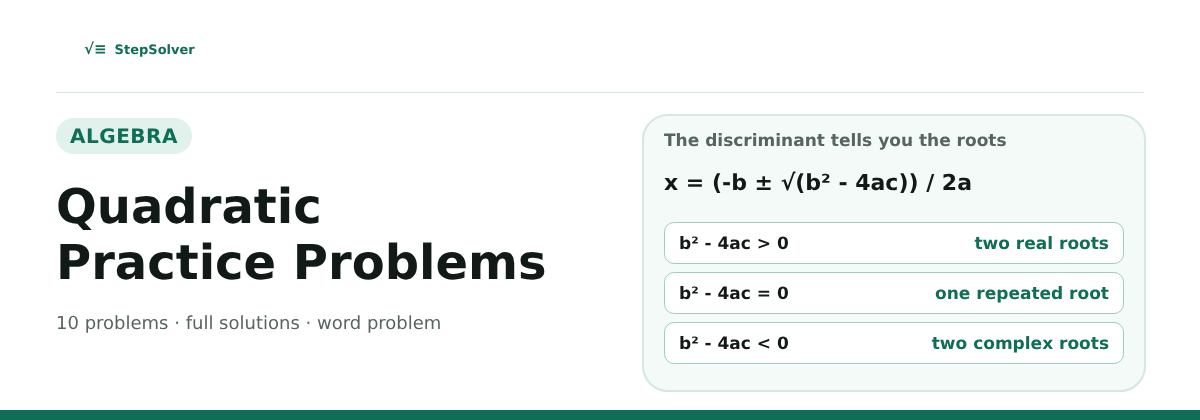
10 Quadratic Equation Practice Problems (With Step-by-Step Solutions)
Ten worked problems from factoring to the quadratic formula, complex roots and a word problem, with full solutions.
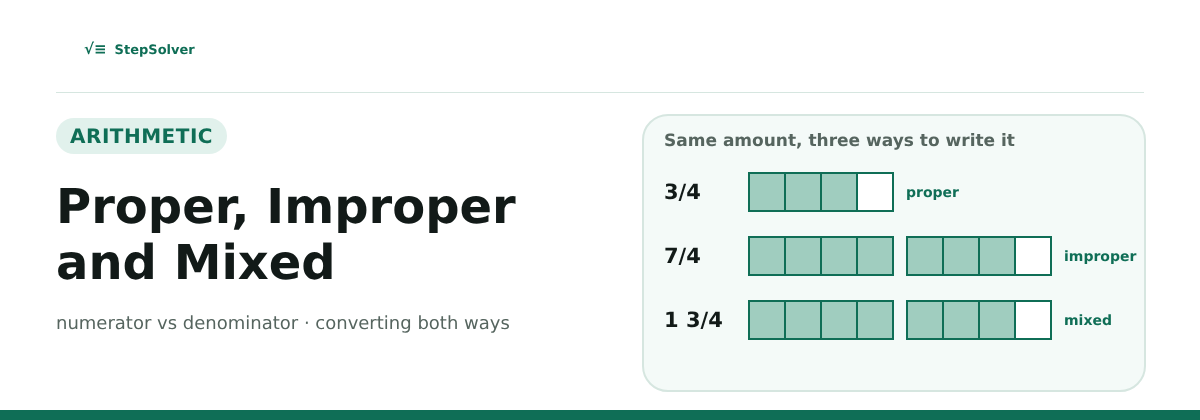
Proper vs Improper Fractions vs Mixed Numbers (With Examples)
How to tell the three fraction types apart, convert between improper fractions and mixed numbers, and which form to use.
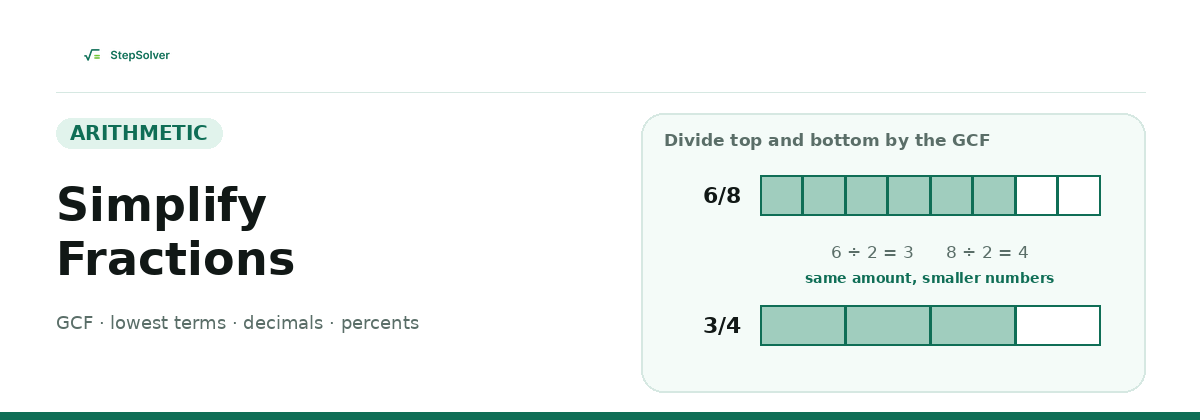
How to Simplify Fractions (and Convert Them to Decimals and Percents)
Three ways to find the GCF, how to simplify improper fractions and mixed numbers, a simplified fractions chart, and decimal and percent conversion.
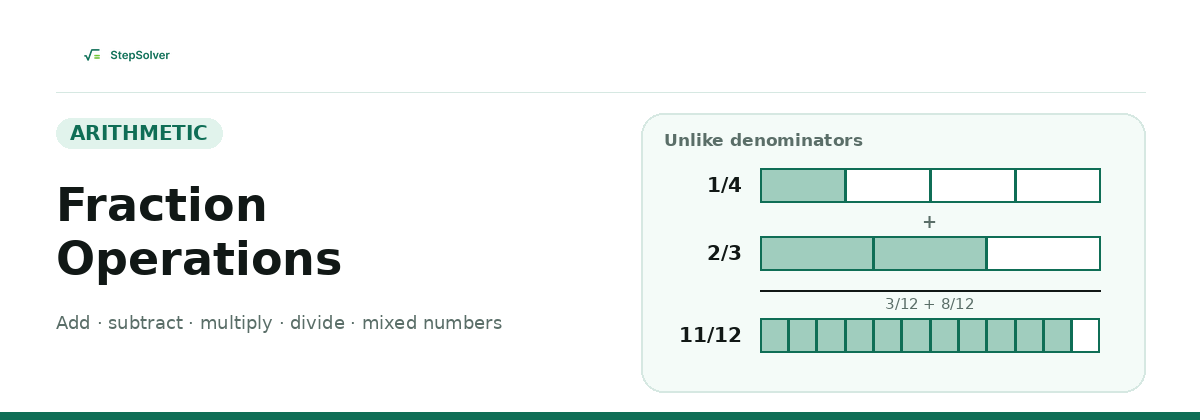
How to Add, Subtract, Multiply and Divide Fractions (Step-by-Step)
The rule for each fraction operation with worked examples, how to handle mixed numbers, and the mistakes that cost the most marks.
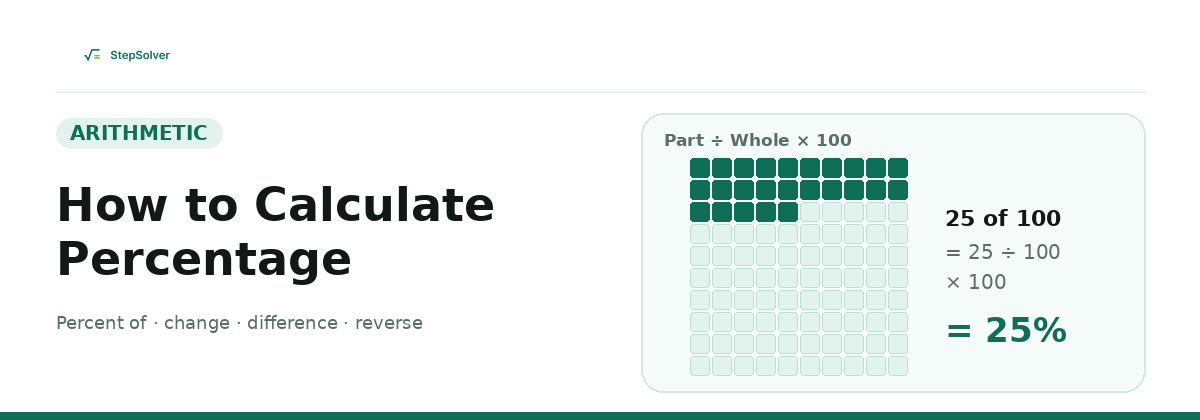
How to Calculate Percentage: Formulas for Every Type (With Examples)
Percent of a number, percentage change, difference, percent error and reverse percentages, with worked examples and a conversion table.
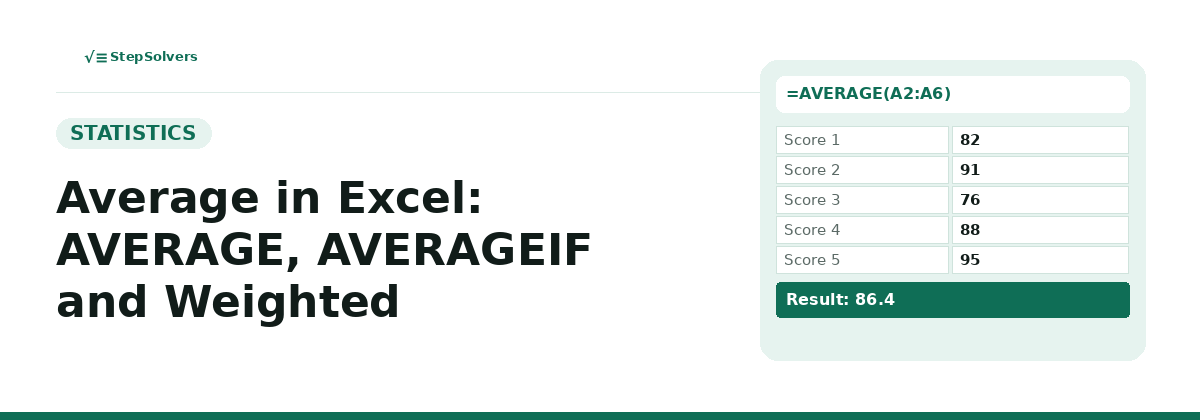
How to Calculate Average in Excel: Formulas and Examples
AVERAGE, AVERAGEIF and weighted average formulas with worked examples, how to average averages correctly, and how to fix common errors.
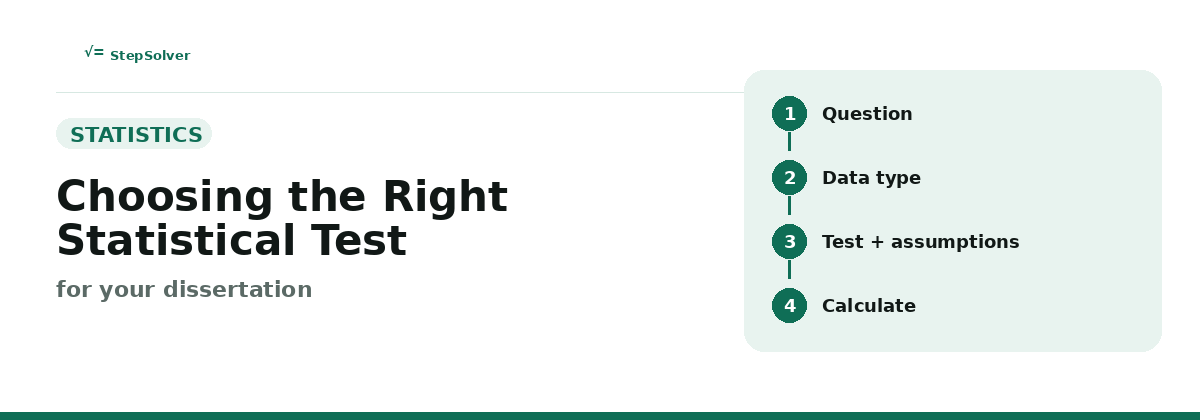
Choosing the Right Statistical Test for a Dissertation: A Quick Guide
How to match your research question to the right test, check the assumptions, and follow a worked standard deviation example.
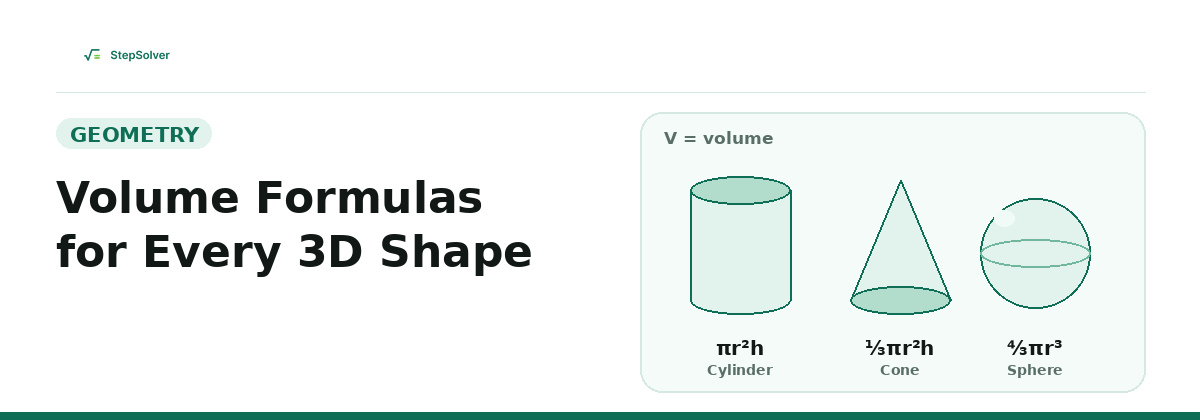
Volume Formulas for Every 3D Shape: The Complete Reference Cheat Sheet
Every volume formula in one place, from cylinder and cone to sphere, prism, frustum and capsule, with worked examples and unit conversions.
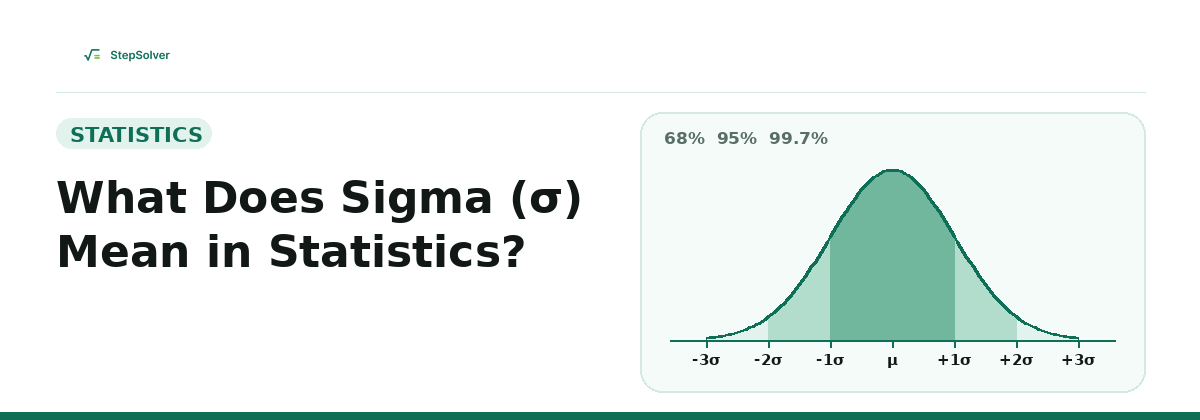
What Does the Sigma (σ) Symbol Mean in Statistics?
Sigma is the population standard deviation. See how σ differs from s and Σ, what 1, 2 and 3 sigma mean, and how to type the symbol.
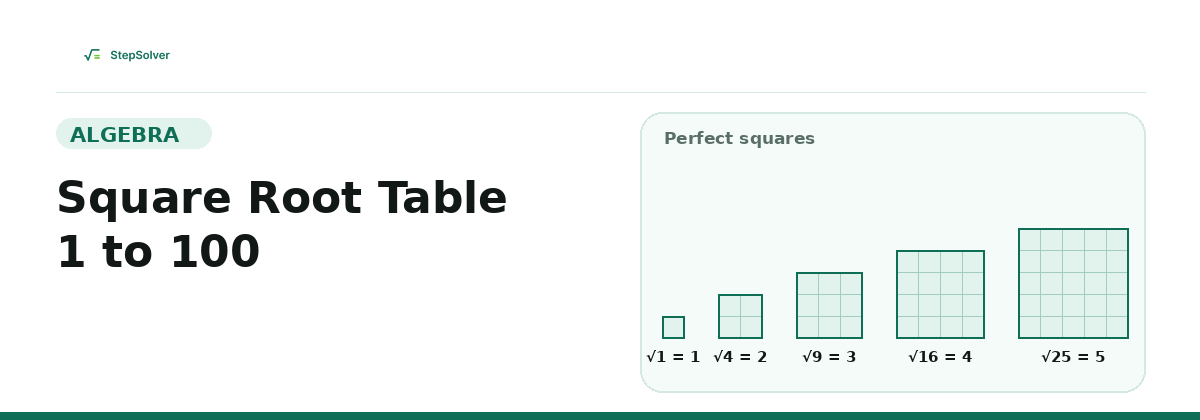
Square Root Table: Perfect Squares and Square Roots From 1 to 100
Look up any square root from 1 to 100, with simplified radical forms, every perfect square, and a quick way to estimate the rest.
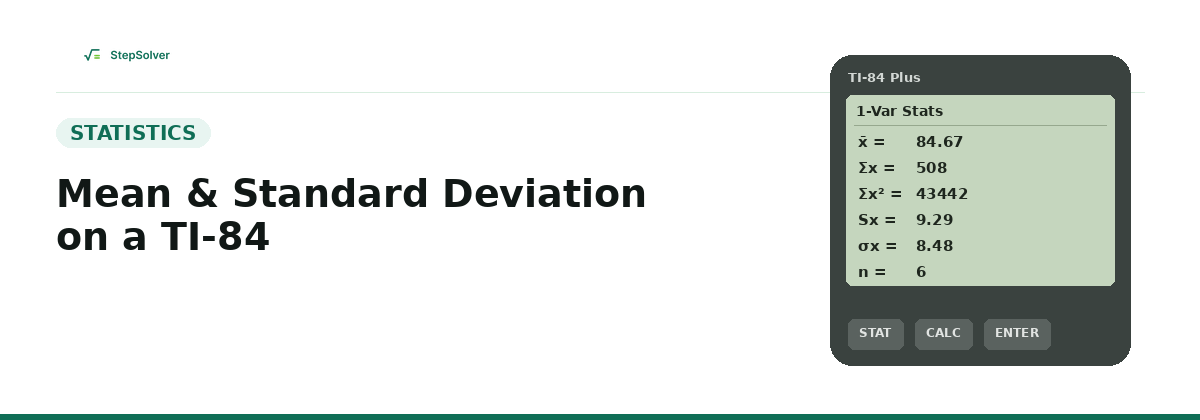
How to Find Mean and Standard Deviation on a TI-84 Calculator
Use 1-Var Stats to get the mean, sample SD (Sx), and population SD (σx) in a few keystrokes, with a worked example.
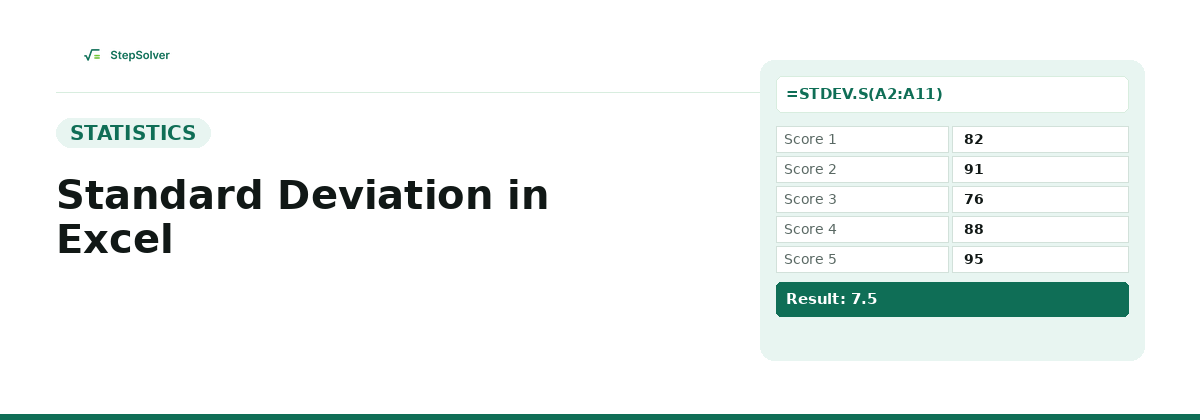
How to Calculate Standard Deviation in Excel (Step by Step)
Use STDEV.S and STDEV.P the right way, with a worked example, a full function reference table, and common mistakes to avoid.
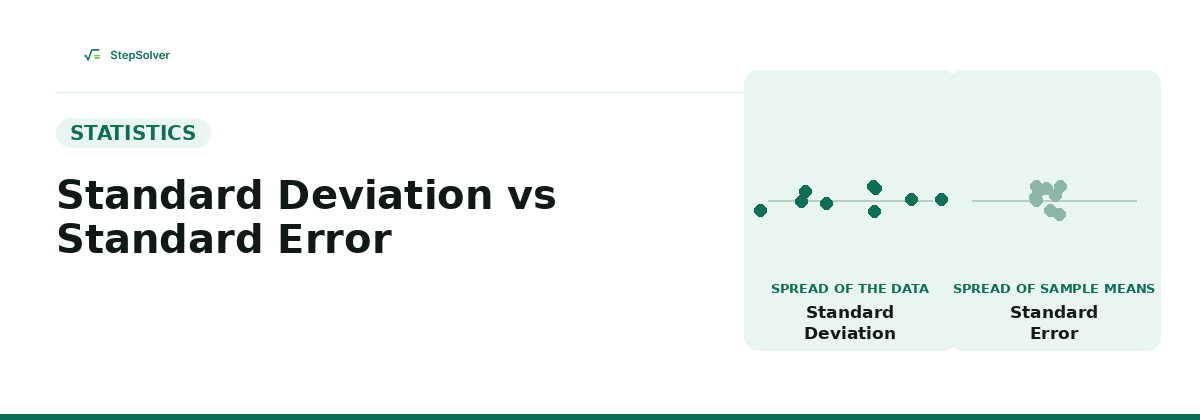
Standard Deviation vs Standard Error: What's the Difference?
Standard deviation measures spread in your data. Standard error measures precision of your sample mean. Here's the formula that connects them.
What Is Variance? Formula, Meaning & How to Calculate It
The variance formula explained simply, a worked example, and how variance relates to standard deviation.